
.jpg)
Keeping your bottles cool and out of the light is what all cellars do, but the best ones do something else entirely by becoming the room guests remember long after dinner has finished. Achieving that takes more than a temperature controlled space and a few racks. It comes down to a set of design decisions that work together from how light falls across the bottles, which materials sit alongside each other and where the eye is drawn first. We have listed 6 features that we focus on when designing bespoke wine cellars for clients across the UK, each chosen for the difference it makes to the finished space.
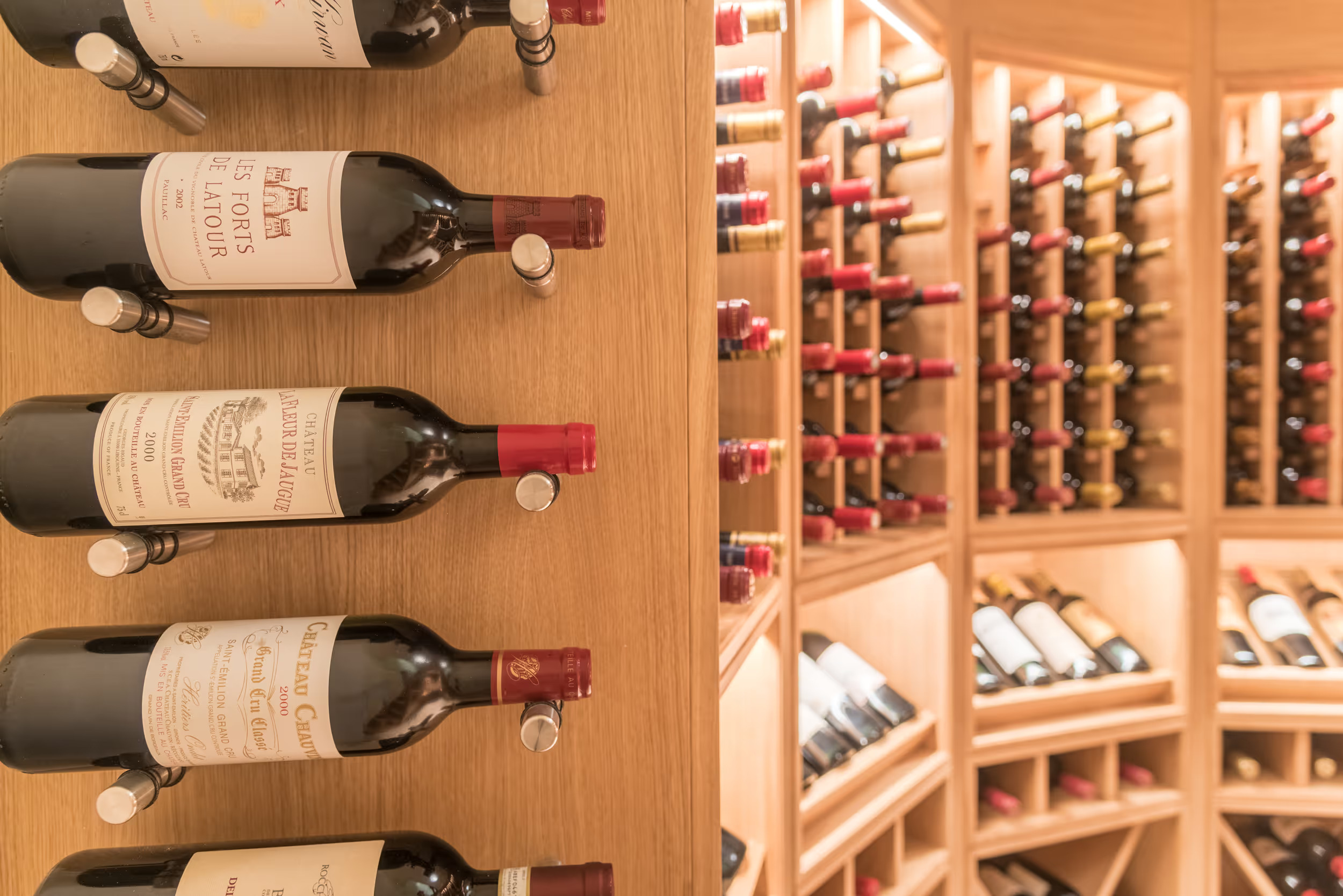
Lighting does more in a wine cellar than make labels readable. Done well, it shapes how the entire room feels. LED lighting has become the standard choice for cellars because it is a non-UV emitting light, generating minimal heat, which matters when every degree affects the wine, while still giving designers full control over colour and placement.
Recessed LED strips fitted beneath shelf lips work well for highlighting rows of bottles without flooding the room with light. Directional spotlights can pick out a single bottle or a piece of stonework, while warmer colours tend to suit the mood of a cellar better than cooler, brighter tones. Lighting deserves attention at the design stage rather than as a finishing touch as it's one of the easiest ways to lift a cellar from functional to memorable.
Pairing materials thoughtfully is one of the fastest ways to give a wine cellar real character. Timber remains the most popular base material for its warmth and durability, but the cellars that stand out tend to bring in at least one contrasting element whether it’s natural stone, brushed steel, bronze or glass.
Oak racking against a stone feature wall creates a grounded, traditional look. Steel framework paired with glass shelving feels sharper and more contemporary. Even small touches, such as a stone threshold or a cable-wire racking system, can shift the entire tone of the room. The aim is a cellar that fits naturally within the rest of the house while still holding its own identity.
Most collections include a handful of bottles that mean more than the rest, be it a rare vintage, a large format bottle or a bottle bought to mark an occasion. Giving these bottles a dedicated space, separate from general storage, lets them do double duty.
Label forward display racks, individually lit niches and glass fronted cabinets all work well for this purpose. Placed near the entrance or at eye level, a feature display becomes the first thing visitors notice and often the starting point for conversation. Standard racking keeps a collection organised, while a dedicated display gives it presence.
Glass has become a defining feature in contemporary cellar design. Glass walls and doors let a collection stay visible from outside the room, while the cellar itself remains a sealed, climate controlled environment.
A full glass wall works well where the cellar sits within an open plan living or dining space, turning it into a visible centrepiece. A glass door on an otherwise solid-walled cellar offers a more contained alternative, suited to smaller spaces or period homes where matching existing materials matters. Either approach keeps the collection on display without compromising the conditions it needs.
Two cellars holding the same number of bottles can serve very different purposes. Some owners want pure storage with plenty of racks, climate control and nothing else. Others want a room they can step into with friends, open a bottle and stay a while. The right design depends on which of these matters more.
Adding a tasting table, integrated glassware storage or a small seating area turns a cellar into a space for entertaining rather than just storing. These additions don't require much room and a simple narrow ledge for glasses or a fold-down table can be enough in a compact cellar. Thinking through how the space will actually be used, before the design is finalised, makes the difference between a cellar that gets visited occasionally and one that becomes part of how a home is lived in.
None of the design choices above matter if the cellar fails at its primary job which is to keep wine in good condition over years, and sometimes decades. Stable temperature, controlled humidity and good ventilation are all equally important, regardless of how the room looks.
The cellars that succeed on both fronts integrate climate control systems into the design from the outset, rather than fitting them around finished racking and lighting. Units can be concealed within cabinetry, ducted behind walls, or built into the structure itself, so the technical side of the room stays out of view while doing its job. Getting this right is what separates a wine cellar that looks good from one that protects what's inside it for the long term.
Get these 6 elements right, and a wine cellar becomes one of the most distinctive rooms in the house, the kind people ask to see again on their next visit. We design and build bespoke wine cellars, combining the technical requirements of proper wine storage with the design detail that makes a cellar worth showing off. If you're planning a new cellar or reworking an existing space, we'd be glad to talk through what's possible.
.jpg)