
.jpg)
Wine maturation is a slow and delicate process, and the environment in which bottles are stored plays a far greater role than many people realise. Grape variety, winemaking technique, and vintage conditions all shape how a wine develops, although it is storage that often determines whether a bottle ever reaches its true potential. Without the right conditions, even the finest wines can deteriorate well before their time.
A common assumption is that wine simply improves with age, but in reality maturation is considerably more sensitive than that. Wine responds constantly to changes in temperature, humidity, light and movement. When these factors go unmanaged, the chemical processes inside the bottle accelerate in ways that undermine characteristics of the product. A professionally designed wine cellar controls these variables, protecting the investment inside every bottle while giving wines the stable environment they need to evolve properly over the years.
Temperature is the single most important factor in wine maturation and the ideal storage range sits between 12°C and 14°C creating a cool, consistent and undisturbed atmosphere. Even seemingly minor fluctuations cause the liquid inside the bottle to expand and contract, placing repeated stress on the cork. Over time this allows oxygen to enter which flattens flavours, dulls aromas and accelerates spoilage.
Maintaining consistency requires careful thought at the design stage. Insulation, cooling systems and the positioning of the cellar within the home all contribute to temperature stability and is especially important for collectors storing wine over the long term.
Humidity is equally worth getting right and this is because corks depend on ambient moisture to remain supple and properly sealed. Too little humidity and they dry out, shrink and allow air in. Too much and mould becomes a concern, damaging both labels and shelving over time. A well-designed cellar targets a humidity level of between 60% and 70%, maintaining the conditions corks need without creating problems of their own.
Lighting is another consideration that deserves more attention than it typically receives. UV exposure triggers chemical reactions inside the bottle that affect flavour and freshness. Natural light is the most damaging, but poorly chosen artificial lighting can generate unwanted heat too. Modern cellar designs use carefully positioned LED lighting to provide practical illumination without compromising the wine.
Ventilation matters just as much as well. Wine is more porous than most people expect and over extended periods, it can absorb surrounding odours through the cork. A cellar with good airflow maintains a neutral, fresh atmosphere that preserves the wine's original character rather than introducing anything unwanted.
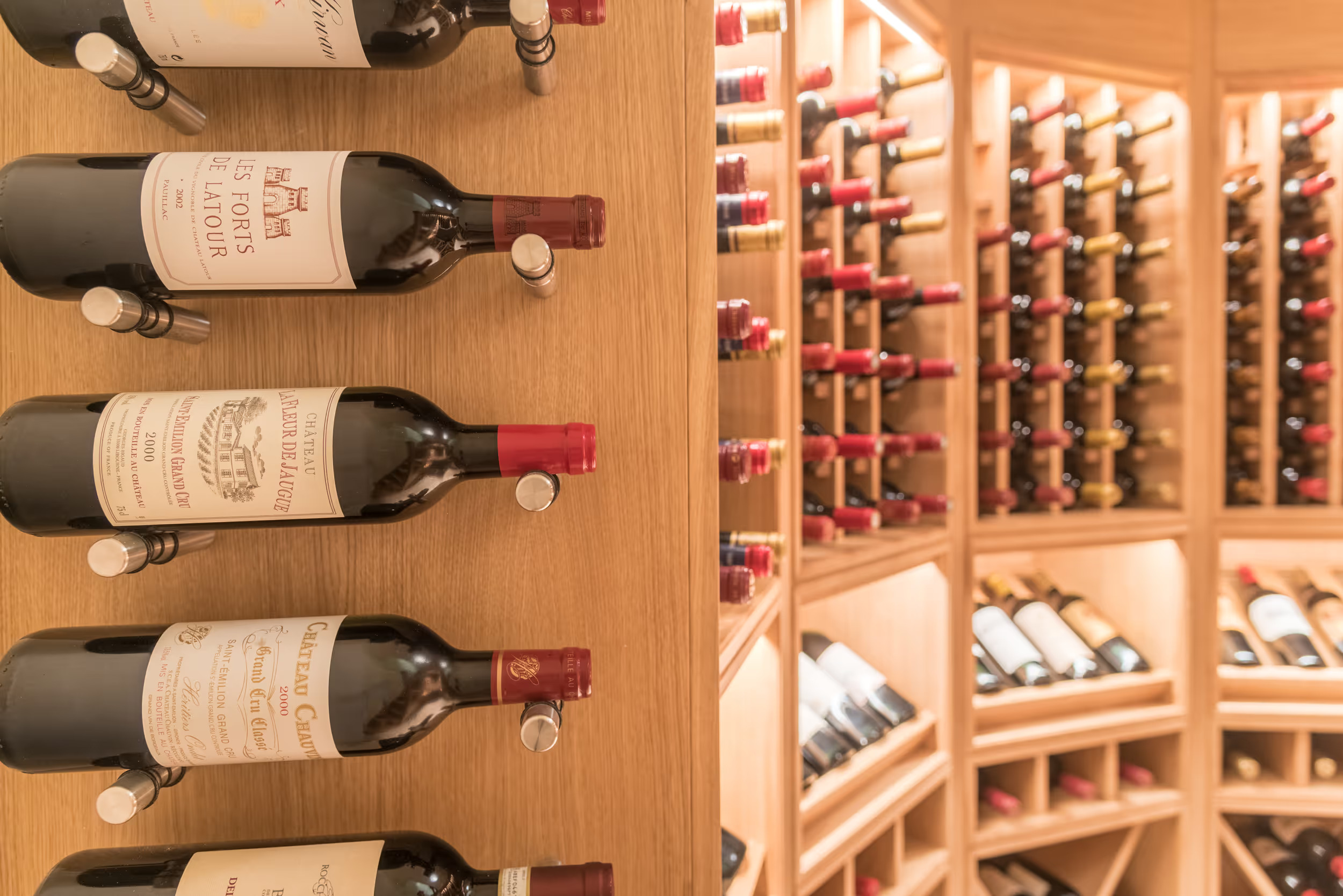
The physical design of a cellar has a direct bearing on how wine ages. Bottles stored horizontally keep the cork in constant contact with the wine, maintaining its seal and preventing premature drying. Racking systems should support consistent positioning, allow easy access and accommodate different bottle shapes and formats without overcrowding.
Vibrations is a factor that is easily overlooked in residential settings. Movement from nearby appliances, passing traffic or general structural activity can disturb sediment in ageing wines and disrupt the maturation process over time. Every element of cellar design from climate control and ventilation through to racking layout and material selection contributes to how a wine develops over time.

.jpg)