

Designing a wine cellar gives you an opportunity to create a space that works with both your collection and the character of your home. While wine cellars were once commonly associated with dark rooms filled with heavy timber racking, today’s designs can take many different forms.
A cellar built for quiet, long term storage tends to favour a different approach to one designed as a talking point for guests. The starting point, then, is not a mood board but a clear sense of purpose: who sees the cellar, how often, and what it needs to say about the collection inside it.
For example a contemporary home might suit a clean, minimalist display with glass and metal details, whilst a more traditional property may call for natural timber, warm lighting and classic architectural features. There is also plenty of room between these two approaches, allowing different materials, colours and finishes to be combined. The important thing is to create a cellar that feels connected to the surrounding space while still providing practical storage for your bottles.
Traditional wine cellar design is built around warmth, texture and materials that age well rather than date quickly. Timber racking usually forms the core of the look, particularly when the grain, stain and joinery are given real attention rather than treated as an afterthought. Depending on the wider interior, this pairs naturally with stone, brick, decorative mouldings or darker finishes to create a settled, established atmosphere. Incorporating soft warmer lighting draws out the character of the timber without flattening it under bright, even light.
This style suits period properties and classic interiors particularly well, but it is not limited to older homes. Refrigeration, humidity control and storage systems can all be built in discreetly, so the room reads as a well crafted wine space rather than a piece of visible equipment.
Contemporary design shifts the emphasis from the furniture to the collection itself. So rather than letting timber racking dominate the room, the design leans on slim profiles, glass and metal, with lighting used precisely to keep the bottles as the focal point. This works particularly well where the cellar is visible from an adjoining space such as a kitchen, dining room or entertaining area, since the glass and clean lines create a visual link between rooms rather than a closed off storage box.
Floor to ceiling glazing is a common feature for this exact reason, as it maintains the controlled environment the wine needs while keeping the cellar part of the visual flow of the home. Neutral colour palettes and uncluttered layouts reinforce this, and integrated lighting can be directed at individual bottles, a feature wall or architectural detailing without overwhelming the room.
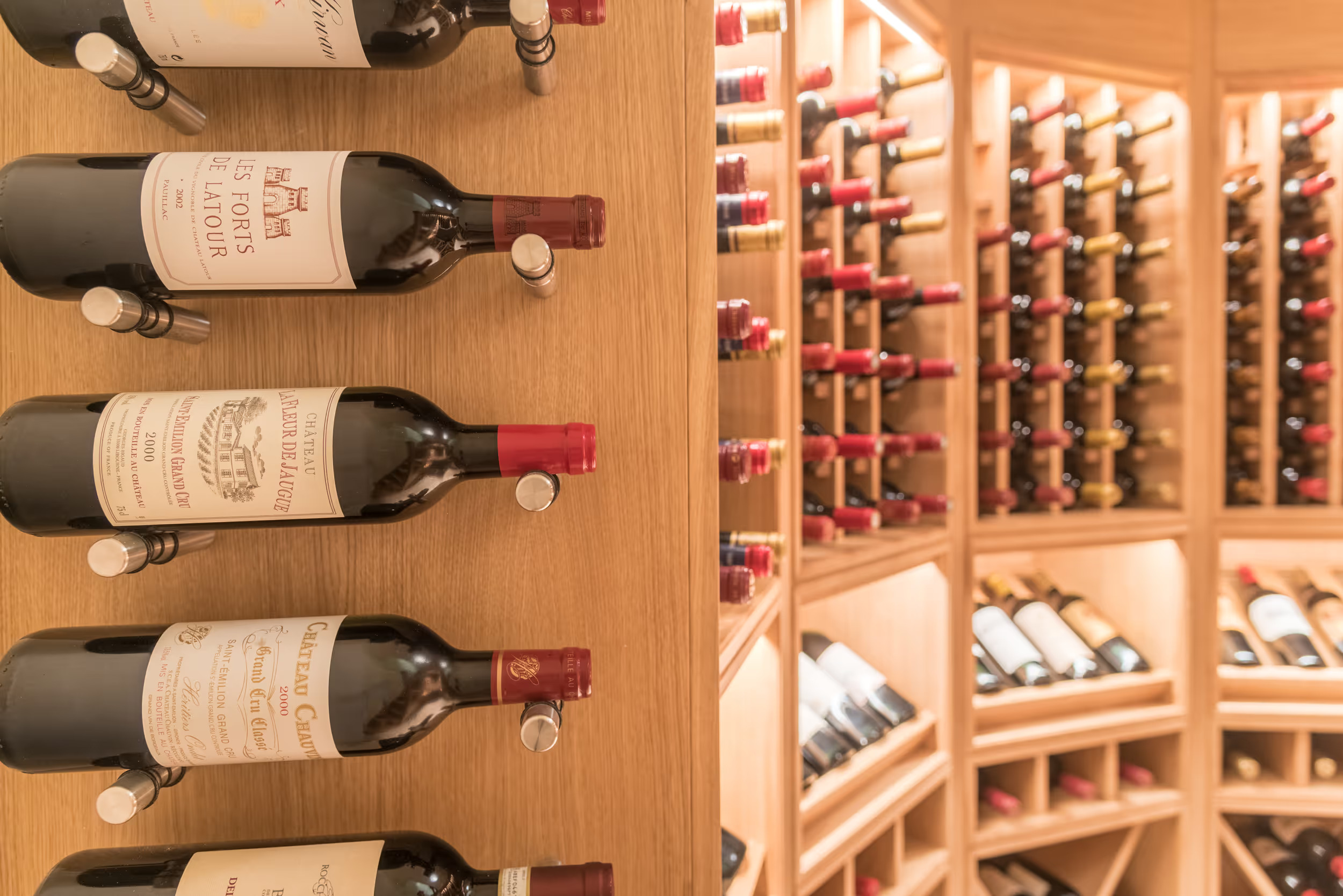
Few homes call for a purely traditional or purely contemporary approach, and a transitional design draws on both. Natural timber can sit alongside contemporary metal supports while classic racking can be paired with frameless glass and precise, modern lighting.
A blend like this earns its place when a cellar needs to bridge two rooms with different interior styles, for instance a reclaimed oak rack set against a black steel frame and glass door, or when a client wants more say over how much visual weight goes to the wine itself versus the surrounding design.
Because a transitional cellar isn't following a fixed template, the materials, proportions and finishes can be chosen specifically for the space rather than adapted from a set style. The result can lean towards contemporary without feeling cold, or towards traditional without feeling overly formal.
Style should follow function rather than the other way round. The available dimensions, the cellar's position in the property, the size of the collection and how the space will be used day to day all shape which direction makes sense. A compact cellar built beneath a staircase calls for a different solution to a dedicated wine room designed for regular entertaining, regardless of which aesthetic is preferred.
Racking should always be organised around how the collection is actually accessed, while doors, lighting and finishes should work with and not against the surrounding interior. None of this can come at the expense of the technical fundamentals as consistent temperature and humidity control remain important features, whatever the room looks like on the surface.
There is no single right answer to whether a wine cellar should be traditional or contemporary and the right style is the one that matches how the room is used and how it sits within the rest of the home. For homeowners who want a cellar designed specifically around their property, their collection and their interior style, our experts can help.
.jpg)