A well-built cellar can still drift out of range. Cooling filters clog, door seals wear and humidity falls during a dry winter, and because the room looks exactly the same, the change often goes unnoticed until a bottle shows the damage. Regular maintenance catches these problems while they are still small.
Most cellars need far less attention than owners expect. A few short, regular checks cover nearly everything. This guide sets out what to do, what to avoid and how often, with a simple schedule at the end to keep on hand.
Aim for a set point of 12–14°C (54–57°F) and humidity of 60–70%. Consistency matters more than the exact figure, but it helps to know how a cellar cooling system works. It does not hold the air at one fixed temperature: most units run with a deadband of around ±2°C either side of the set point, switching on as the air warms and off once it has cooled. Air readings that move within that band are normal. The wine itself is far more stable, because liquid holds its temperature much better than air, so the bottles see only a fraction of those short cycles. What harms wine is a sustained drift or repeated swings well outside the normal band, so those are the changes to watch for.
Your cooling controller is the best place to start. The controllers we fit keep a full history of temperature and humidity, so you can see what happened overnight or while you were away, which a single reading cannot show. If your controller does not have a built-in history feature, fit a digital thermometer and hygrometer that record minimum and maximum readings, or a data logger, to do the same job. Check the data weekly and look at the trend rather than individual readings. If the temperature regularly goes beyond the normal band around your set point, the average creeps up over several days, or humidity stays outside range for more than a week, check the cooling unit, door seal and insulation before the corks are affected. Seasons deserve particular attention: summer heat puts the cooling system under strain, and winter central heating dries the air.
A monthly walk through the cellar takes a few minutes. Look for:
If you find a bottle with any of these signs, move it to a place where you will remember to open it soon. Check the racking at the same time for loose fixings, moisture marks or signs of movement.
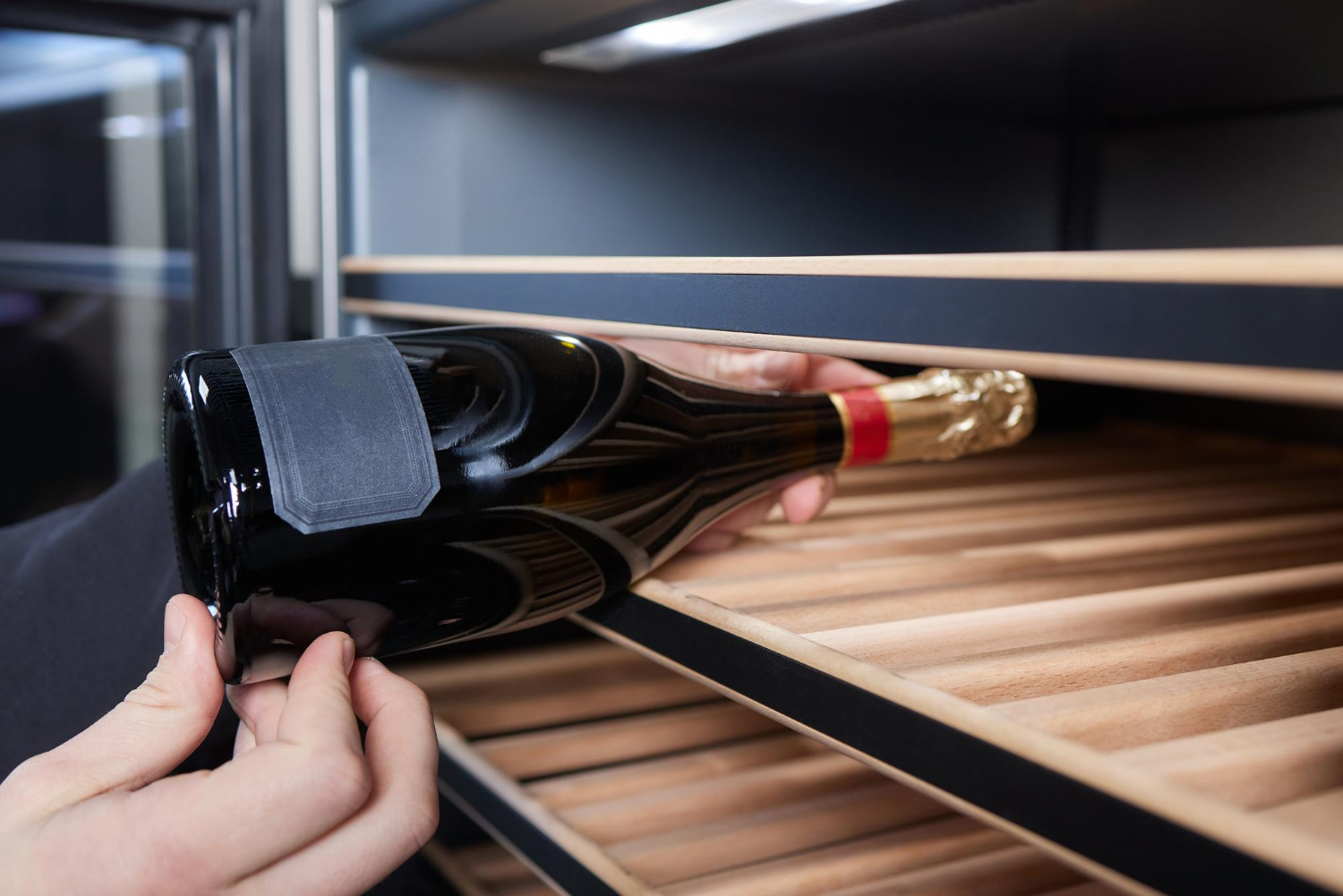
Handle older bottles gently and move them only when necessary, as they may contain sediment. Cork-sealed bottles should be stored so the wine stays in contact with the cork. Lying flat is the simplest way to achieve this, but a slight incline, as used in many display racks, works just as well provided the wine still covers the cork. Screw-cap bottles can sit in any position that suits the rack.
Update your inventory whenever bottles come in or go out, and check it against the shelves every quarter. If your collection is outgrowing its filing system, our guide to organising your wine collection covers it in detail.
Stale air, condensation on walls or glass, a musty smell and visible mould are all signs that moisture is collecting somewhere. Bringing in outside air to fix the problem can make matters worse, because warm, humid air undoes the work of the cooling system. Any change to ventilation should be matched to the room and its cooling equipment, so take specialist advice before altering it.
Keep lighting low-heat LED and switch it off when you leave. Keep direct sunlight off the bottles; where that is unavoidable, a UV or solar control film on glass doors and windows helps, as white and rosé wines in clear bottles are particularly vulnerable to light. Keep radiators and underfloor heating away from the wine storage area. Wine can pick up odours through the cork, so store paint, solvents, cleaning products and anything strongly scented elsewhere. When cleaning shelves and racks, use mild products and minimal water, and let surfaces dry fully. Remove empty cartons promptly, as they hold moisture and encourage mould.
A cellar cooling system runs for much longer periods than a typical air-conditioning unit, so it needs regular professional care. We recommend a service every six months by an F-gas certified engineer, and on Cellar Maison installations this is a condition of the cooling system warranty. Your engineer will clean the filters and check the system at each visit. Between visits, keep vents and grilles clear of boxes and stored items, and leave refrigeration components to a qualified engineer.
Watch for early warning signs: unusual noises or vibration, longer running cycles or a unit that seems to run constantly, water dripping from the unit or pooling beneath it, ice building up on the unit, or difficulty holding the set temperature. Each one is a reason to call for a service visit promptly, because small faults tend to grow, and a blocked condensate drain can damage joinery and flooring if it is left.
Keep the system running when you are away. A cellar that nobody enters for weeks still needs stable conditions, and switching off the cooling to save energy puts the collection at risk.
Door seals also deserve a regular test. Close the door on a sheet of paper. If it slides out easily, the seal is no longer doing its job. Frost, condensation around the frame or a draught are further signs that insulation or seals need attention.
Cellars are far easier to look after when maintenance was considered in the design. Accessible filters and service points, insulation suited to the room, a cooling system sized correctly for the space and monitoring that is easy to read all reduce the effort needed over the years. Remote monitoring can go a step further, alerting you if conditions change while you are away.
Our specialists design and build bespoke wine cellars, wine walls and wine rooms for homes across the UK, with each installation planned around the collection and the space. If you are planning a new cellar, you can book a discovery call or download our buyer’s guide. If you already have a cellar, ask us about a routine maintenance agreement, which includes two engineer service visits a year to keep your cooling system running reliably.